
01
How GLP-1 medications changed obesity treatment
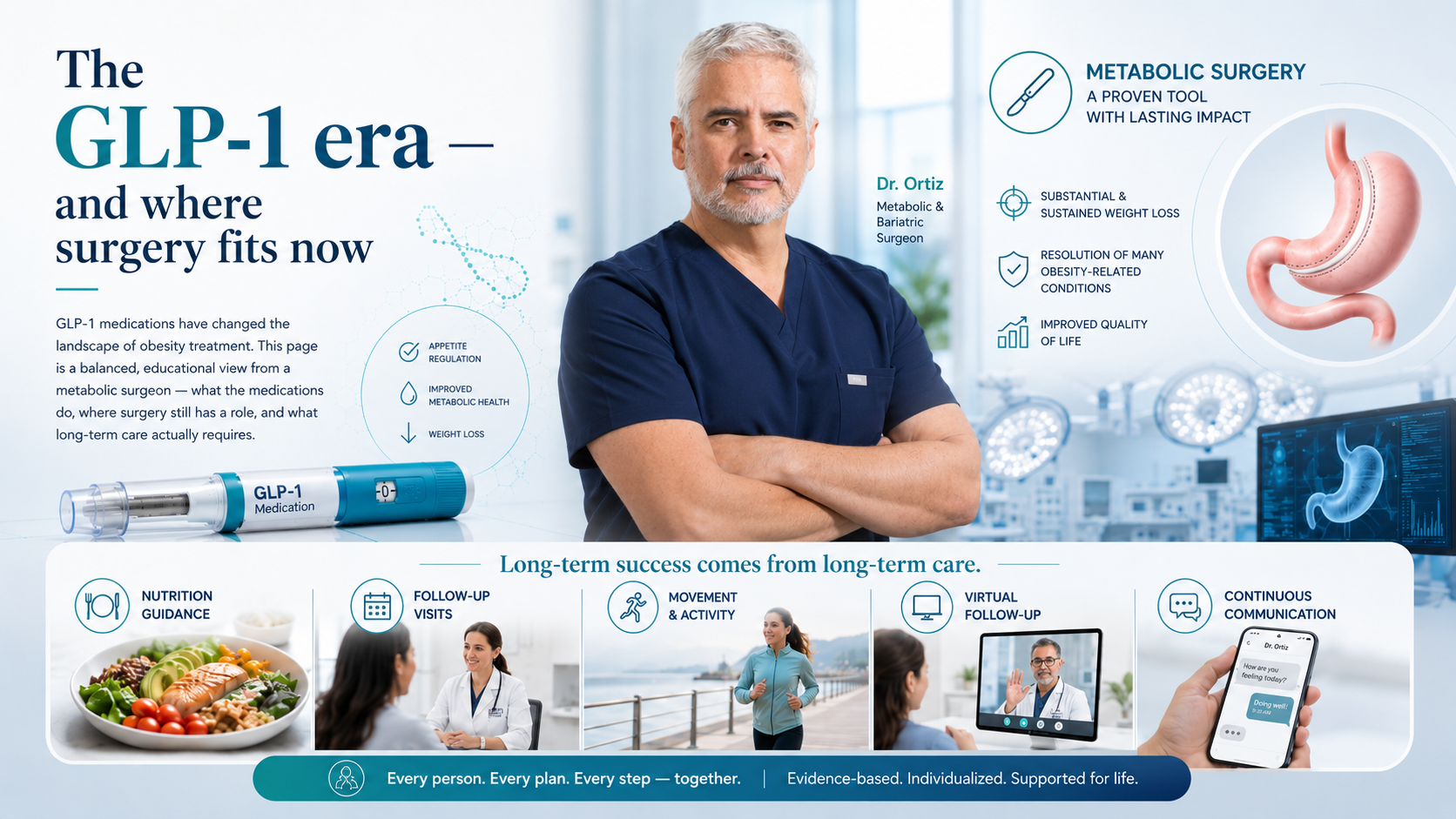
Semaglutide and tirzepatide have demonstrated weight-loss outcomes in the 15–22% range — territory that previously belonged almost exclusively to bariatric surgery. That alone has reshaped the conversation. For the first time, an effective non-surgical option exists for many patients.
02
What the medications actually do
GLP-1 receptor agonists modulate appetite, satiety, gastric emptying, and glycemic control. They do not, by themselves, change the underlying biology of fat-mass regulation. When the medication is discontinued, the body's defended weight setpoint largely reasserts itself.
03
Current role of medications
Pharmacotherapy is a first-line option for many patients with class I and class II obesity, an adjunct before or after surgery, and a critical tool for patients who are not surgical candidates or who decline surgery.
04
Combination therapies
Surgery + medication strategies — typically a sleeve gastrectomy or bypass followed by GLP-1 maintenance — are an area of active research. Early signals suggest improved durability of weight loss and improved metabolic markers compared to either modality alone, though long-term trials are ongoing.
05
Transitioning after GLP-1
Many patients arrive at our clinic having lost significant weight on GLP-1 medication but unable to tolerate ongoing therapy — due to cost, side effects, or insurance changes. For these patients, metabolic surgery is often the most durable next step, and the preoperative weight loss is a clinical advantage.
06
Long-term metabolic care
Obesity is a chronic disease. GLP-1 medications, surgery, and behavioral support are all tools — none of them are cures. Patients deserve a clinical relationship that lasts decades, not weeks, and a treatment plan that adapts as their biology and circumstances change.
07
What I tell my patients
There is no single 'best' treatment. There is the best treatment for you, this year, given your biology, your tolerance, your access, and your goals. That decision deserves time, expertise, and honest conversation — not a one-size-fits-all algorithm.
08
The future
Next-generation triple agonists, oral formulations, longer-duration injectables, and new combination protocols are all in advanced trials. The next five years will look very different from the last five. The principles, however — long-term follow-up, individualized care, and respect for the biology — will not change.
"There is no single best treatment. There is the best treatment for you, this year, given your biology, your tolerance, your access, and your goals."
Dr. Ariel Ortiz®